Choosing between indoor and outdoor wedding venues is one of the biggest decisions you’ll make early in planning. It affects your budget, guest comfort, décor options, timeline, and overall experience.
At first glance, it may seem like a simple aesthetic choice. Garden romance or ballroom elegance? Beach sunset or chandelier glow? But when couples truly compare indoor and outdoor wedding venues, they quickly realize the decision goes much deeper than scenery.
The major differences come down to four things: weather control, cost predictability, guest comfort, and logistical complexity. Outdoor weddings rely on natural conditions and often require additional rentals and backup plans. Indoor weddings provide climate control, built-in infrastructure, and a more predictable flow from start to finish.
This guide breaks down those real differences so you can confidently decide what fits your vision, your guests, and your peace of mind.
Understanding the Core Difference
When couples compare an indoor vs outdoor wedding, the first thing they picture is scenery. Outdoor weddings promise open skies, greenery, and sunset views. Indoor weddings showcase chandeliers, architecture, and curated ambiance. But the real difference isn’t about aesthetics; It comes down to control versus exposure.
Outdoor spaces are influenced by elements you can’t manage: weather shifts, wind, temperature, sound restrictions, and daylight limitations. Even with backup plans, you’re still adapting to variables outside your control.
Indoor spaces, on the other hand, offer full command over the environment. Climate stays consistent. Lighting adjusts to your vision. Sound systems operate without interference. Timelines stay intact.
When evaluating indoor and outdoor wedding venues, ask yourself a more practical question:
Do we want to design around unpredictable conditions or celebrate within a controlled setting built for events?
Romance exists in both. The difference is how much uncertainty you’re willing to accept.
Weather Control vs Weather Risk
The weather is the single biggest difference between indoor and outdoor wedding venues. Outdoor weddings are beautiful, but they are exposed to the elements. Temperature spikes, strong winds, sudden rain, and heavy humidity are all real possibilities. Even mild weather changes can affect comfort, sound quality, décor stability, and photography.
Common outdoor challenges include:
- Extreme heat that drains guests’ energy
- Wind that disrupts florals, candles, and audio
- Unexpected rain delays
- Humidity that impacts hair, makeup, and formal attire
Yes, you can plan for these issues with tents, heaters, fans, flooring, or backup spaces, but those solutions add cost, complexity, and coordination.
Indoor venues remove that layer of uncertainty entirely. Climate control keeps guests comfortable from arrival to the final dance. Your timeline stays on track. Décor remains intact. Vendors work within a predictable environment.
When couples compare indoor and outdoor wedding venues, they often realize that indoor spaces don’t just offer elegance; they offer peace of execution. And if minimizing stress matters to you, that difference is hard to ignore.
Guest Comfort and Accessibility
A wedding is about you, but it’s also about the people who show up to celebrate with you. When comparing indoor and outdoor wedding venues, think beyond the aesthetic and look closely at your guest experience.
Ask yourself:
- Will elderly relatives be able to move comfortably?
- Are young children attending who may need shade or rest?
- Will guests be wearing heels, suits, or formal gowns?
- Is parking close, paved, and easy to access?
Outdoor settings often involve uneven ground, gravel paths, grass, stairs, or long walks from parking areas. In warm climates, heat drains energy quickly. In colder months, wind and low temperatures shorten attention spans. Even minor discomfort can affect how long guests stay engaged.
Indoor venues remove many of these concerns. Solid flooring, climate control, accessible restrooms, valet or structured parking, and defined seating areas create a smoother experience from arrival to departure.
These details may not be glamorous, but they shape how your wedding feels. And for many couples deciding between indoor and outdoor wedding venues, guest comfort becomes the key factor that tips the scale.

Décor Flexibility and Visual Control
Outdoor weddings depend on natural beauty. While that’s appealing, it also limits how much you can transform the space.
Indoor venues provide:
- Controlled lighting
- Adjustable ambiance
- Stage design options
- LED walls and video screens
- Dramatic chandeliers
When couples compare indoor and outdoor wedding venues, they’re often surprised to learn how much more customizable indoor spaces are.
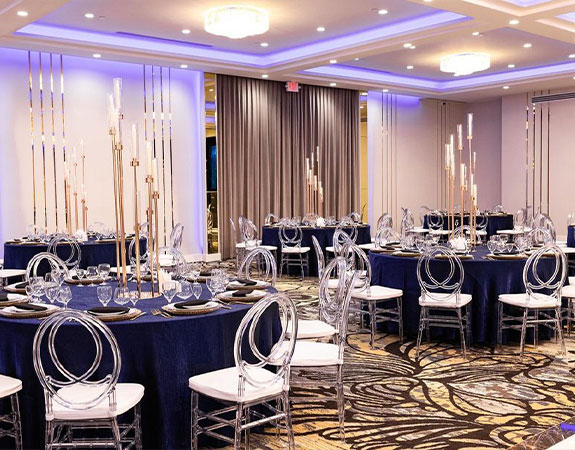
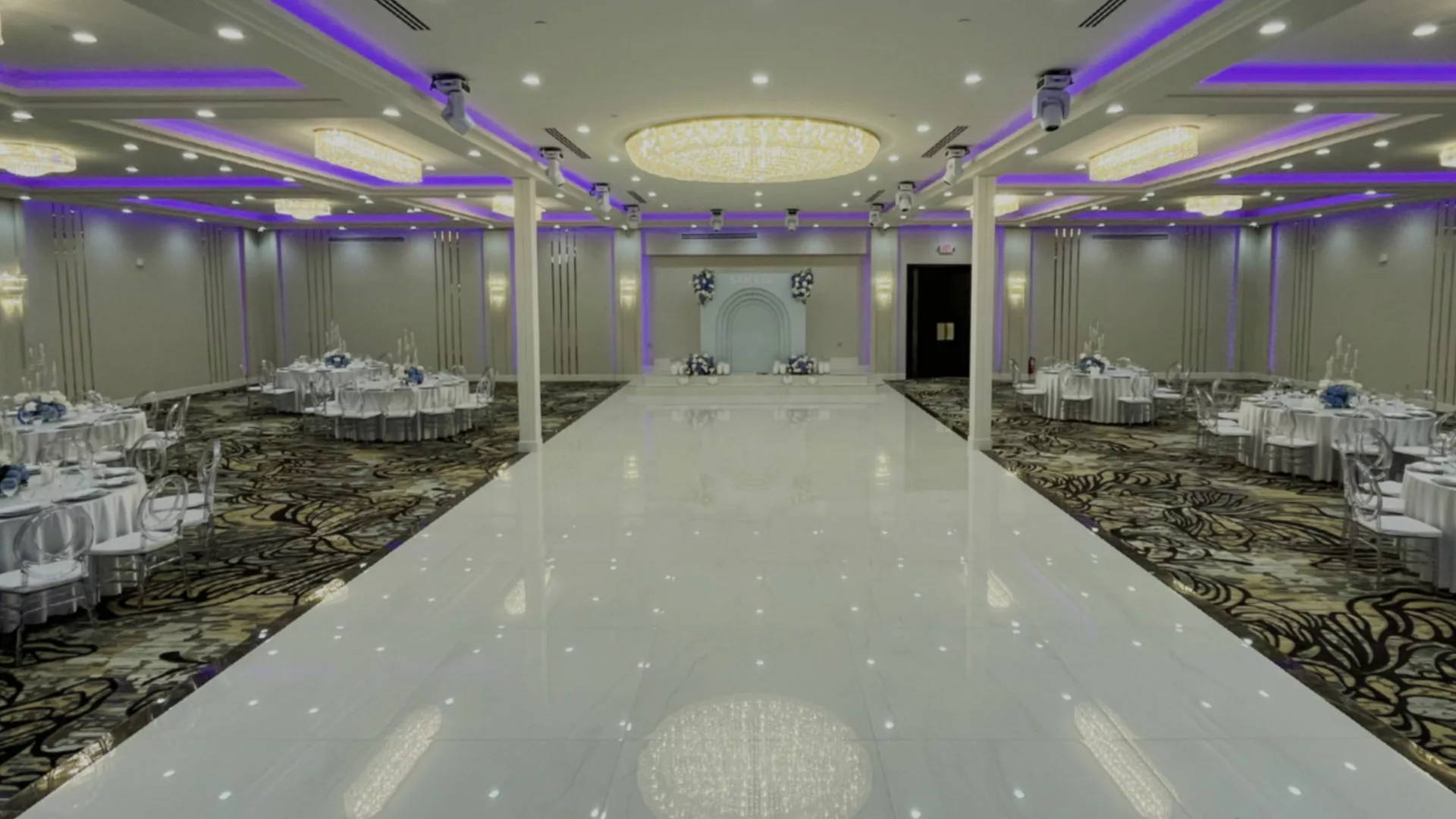
At Omnia, our venue, for example, couples host up to 350 guests in a 4,600 sq. ft. ballroom featuring chandeliers, a custom bar, a bridal suite, an entertainment stage, and an LED wall. The space can feel classic, modern, romantic, or bold, depending entirely on your design direction. Indoor doesn’t mean limited. It means adaptable.
Budget Predictability
Cost isn’t just about the starting price; it’s about what gets added later. That’s why budget clarity is such an important factor when comparing indoor and outdoor wedding venues.
Outdoor weddings often look affordable at first glance. But once you begin pricing the full setup, additional expenses start to surface:
- Tent rentals
- Flooring installations for grass or uneven terrain
- Generator rentals for lighting and sound
- Portable restrooms
- Extra staffing for setup and breakdown
Individually, these may not seem overwhelming. Together, they can significantly increase your final investment. And because many of these costs are conditional, based on weather or venue limitations, they aren’t always obvious in the initial quote.
Indoor venues, especially all-inclusive ones, typically provide built-in infrastructure. Catering, tables, chairs, lighting, staffing, and coordination are often bundled into structured packages. That means fewer vendors, fewer contracts, and fewer surprise add-ons.
When couples ask how to decide between an indoor or outdoor wedding, predictability often becomes the turning point. A stable cost structure makes planning less stressful and more transparent.
If you’re actively thinking about how to allocate your wedding funds wisely, you may also want to read our guide on how to do a wedding budget that works. It breaks down where couples typically overspend, and how to avoid it.
Because in the comparison between indoor and outdoor wedding venues, financial clarity matters just as much as beauty.
Timeline and Logistics
Outdoor weddings typically require longer setup and teardown times. Vendors must work around weather, daylight, and terrain limitations.
Indoor venues provide structure:
- Clear load-in times
- Dedicated coordination teams
- Built-in lighting and sound
- Defined ceremony and reception flow
When reviewing indoor and outdoor wedding venues, think about how much logistical involvement you want. Do you want to manage multiple moving parts or work within a streamlined system? Indoor settings simplify execution significantly.
Photography and Lighting
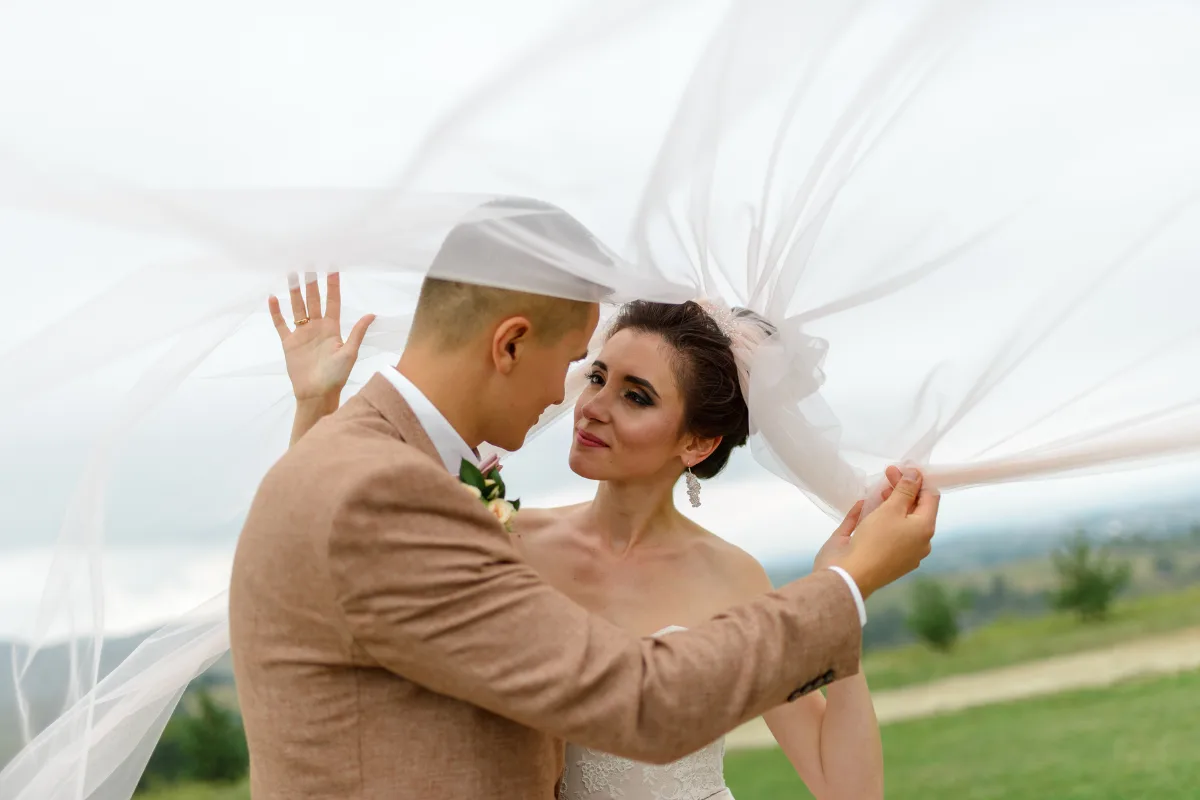
Outdoor weddings are famous for golden hour. The soft sunset glow is beautiful, and there’s no denying its appeal. But lighting changes quickly. Once the sun sets, outdoor environments depend heavily on additional rentals, generators, and temporary fixtures. Shadows shift. Bright midday sun can cause squinting. Wind can affect candles and décor. And cloudy weather alters the entire mood of your photos.
Indoor venues offer something different: control. With professional lighting systems, you get:
- Consistent brightness throughout the event
- Balanced exposure with no harsh glare
- Even lighting that flatters guests
- Reliable ambiance long after sunset
When couples compare indoor vs. outdoor wedding options, the question isn’t which setting produces the most beautiful photos. Both can. The real question is which one provides predictable results from ceremony to final dance.
Modern indoor venues often include adjustable lighting, chandeliers, stage lighting, and LED enhancements that create dramatic, customized backdrops. Instead of racing against daylight, you design the mood exactly how you want it.
That level of control is a major advantage when evaluating indoor and outdoor wedding venues.
Noise, Permits, and Curfews
This is one of the least discussed, but most impactful, differences between indoor and outdoor wedding venues. Outdoor celebrations often operate under local regulations. These may include:
- Noise ordinances that cap decibel levels
- Strict curfews
- Permit requirements for amplified music
- Neighborhood restrictions
These rules can shorten your reception or limit live entertainment. In some areas, music must stop earlier than couples expect.
Indoor venues typically function within established event frameworks. Because they’re built for gatherings, they often provide:
- Structured entertainment timelines
- Dedicated sound systems
- Fewer community disruption concerns
- Clear guidelines that are built into your contract
When deciding between an indoor and an outdoor wedding, couples rarely consider sound laws or permit approvals at the outset. But these details directly impact how long you can celebrate and how freely you can design your reception.
And when you’re comparing indoor and outdoor wedding venues, understanding those restrictions early can prevent unexpected disappointments later.
So, How to Decide Between an Indoor or Outdoor Wedding?
If you’re wondering how to decide between an indoor or outdoor wedding, the answer isn’t about trends, it’s about priorities. Start by looking at your real-life conditions, not just inspiration photos.
1. Evaluate Your Climate
Be honest about your location and season. If your area experiences intense heat, strong winds, sudden rain, or temperature swings, those factors will influence your day more than décor ever will. Indoor venues remove climate risk entirely. Outdoor venues require flexibility and backup planning.
2. Assess Guest Comfort
Think about who is attending. Large guest counts, elderly relatives, children, or formal dress codes all increase the importance of stable flooring, controlled temperatures, and easy accessibility. Indoor spaces naturally support those needs.
3. Consider Your Stress Tolerance
Some couples are comfortable adapting in real time. Others prefer knowing exactly how the day will unfold. Outdoor weddings require a higher tolerance for unpredictability. Indoor settings provide structure and logistical consistency.
4. Define Your Design Flexibility
Outdoor weddings rely on the environment to create atmosphere. Indoor venues allow you to transform the space completely: lighting, layout, staging, décor, and mood are all adjustable.
When couples thoughtfully compare indoor and outdoor wedding venues, they often discover that control, comfort, and predictability carry more weight than open-air scenery. The best decision is the one that supports how you want to feel and not just how you want it to look.
Why Many Modern Couples Are Leaning Toward Indoor Celebrations
Today’s couples are planning differently than they did a decade ago. They’re not just thinking about how the wedding looks in photos; they’re thinking about how the entire experience unfolds from the moment guests arrive to the final song of the night.
Indoor venues have become increasingly popular because they create a complete, contained experience. Everything happens within one cohesive environment. Guests move smoothly from welcome drinks to dinner to dancing without transportation gaps, weather interruptions, or layout complications.
Rather than coordinating multiple vendors across open spaces, couples can focus on atmosphere and personalization inside a space designed specifically for events.
At Omnia Venue, that experience includes:
- A 4,600 sq. ft. ballroom that accommodates up to 350 guests
- Statement chandeliers that anchor the room visually
- A private bridal suite for preparation and quiet moments
- A custom bar and lounge setup
- An entertainment stage with LED wall and video screen
- Built-in infrastructure including valet service and WiFi
These elements don’t just simplify logistics; they elevate the guest journey. Lighting transitions feel intentional. Sound carries evenly. The celebration flows without environmental interruptions.
When couples compare indoor and outdoor wedding venues, many realize they’re not just choosing a location. They’re choosing the kind of experience they want to host: one that feels coordinated, immersive, and thoughtfully designed from start to finish.
Choose Confidence Over Trend
There’s no universal “right” answer in the debate between indoor and outdoor wedding venues. Outdoor weddings offer natural scenery and open-air ambiance. Indoor weddings offer structure, stability, and control.
The key is aligning your decision with your priorities. If comfort, customization, and predictability matter most to you, indoor venues provide a powerful advantage.
When couples carefully compare indoor and outdoor wedding venues, they often discover that indoor spaces let them celebrate fully without worrying about the forecast.
Schedule a private tour at Omnia Venue and experience how an elegant indoor setting can bring your vision to life.
Frequently Asked Questions
Are indoor weddings less romantic than outdoor weddings?
Not at all. Romance comes from atmosphere, lighting, and emotion, not location. Indoor venues allow lighting adjustments, candles, and dramatic décor to create deeply intimate settings.
Are outdoor weddings cheaper?
They can appear cheaper initially, but added rentals for tents, flooring, restrooms, and generators often increase total cost beyond expectations.
Do indoor venues feel too formal?
Modern indoor venues can feel formal, modern, minimalist, or even garden-inspired depending on décor. Flexibility is often greater indoors.
Can you bring nature into an indoor venue?
Yes. Floral installations, greenery walls, and natural textures easily create organic aesthetics inside a ballroom.
What’s the safest option for unpredictable climates?
Indoor venues eliminate weather uncertainty entirely, making them ideal in regions with temperature swings or seasonal rain.